
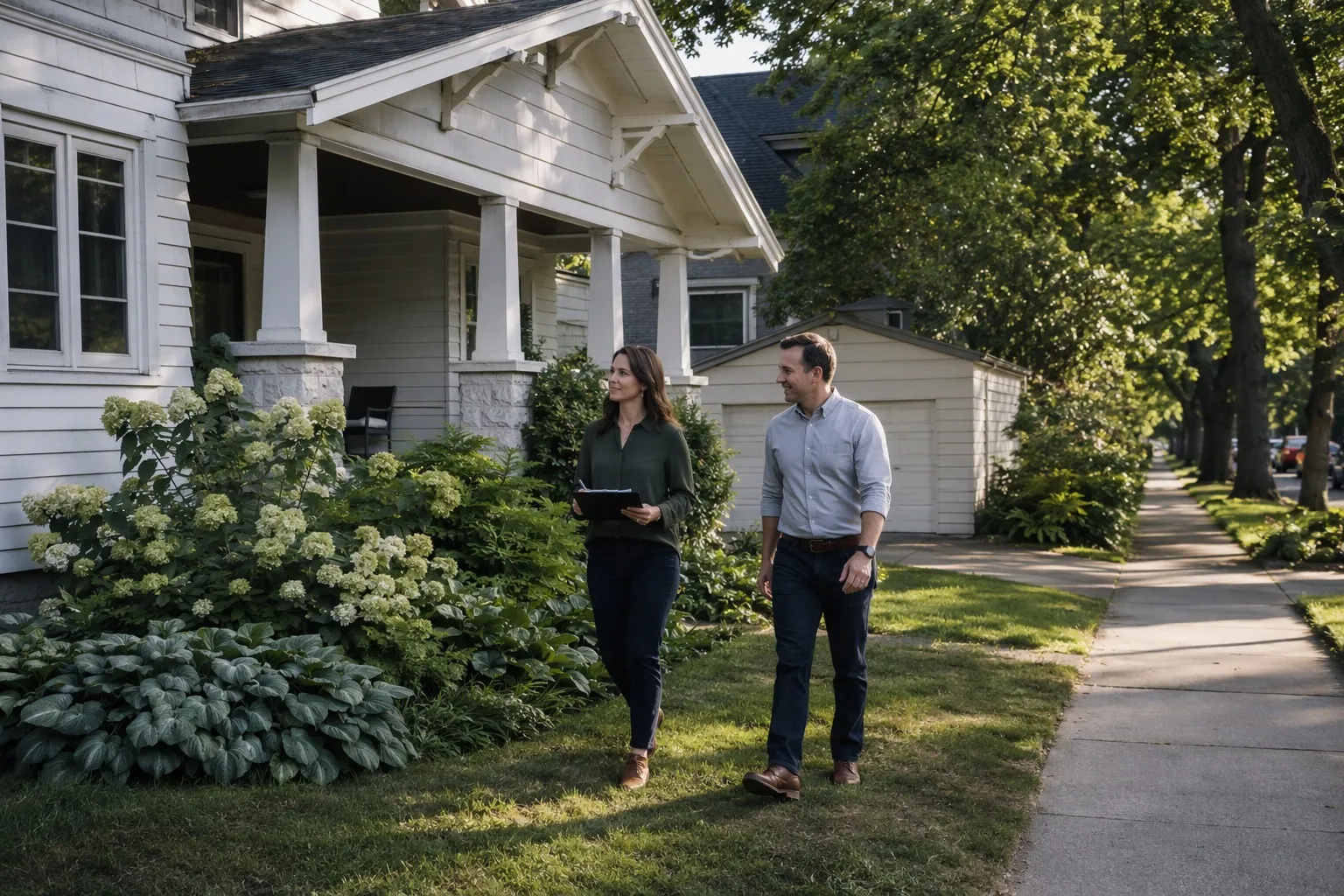
If you have never watched an appraisal, it can look like someone walking around with a clipboard. Here is what is going on.
At the house
The appraiser walks the rooms, the basement, the garage and the yard. They measure the house, note the condition of the roof, windows, kitchen, baths and mechanicals, and take photographs. An older Grand Rapids house with additions, an enclosed porch or a detached garage takes more time, because each piece has to be counted and described correctly.
Away from the house
Most of the work happens after the visit. The appraiser looks for recent sales of similar homes, near the property, close to the date the value needs to describe. Then they adjust for differences, such as size, age, condition, a garage, a finished basement. A Heritage Hill home with its history does not compare cleanly with a newer house in another neighborhood, so the choice of sales and the explanation of it matter.
What goes in the report
The property description, the date, the purpose, the sales used and why, the assumptions made, and the value conclusion. A good report lets a reader follow the reasoning without having to take it on trust.
What the appraiser does not do
They do not decide who gets the house in a divorce, how an estate is divided or what you owe in tax. They do not negotiate a sale price. Those belong to you and your advisers.
What helps you most
Be there or have someone there to give access. Tell us what changed about the house and when. Have the deed, repair records or old photos ready if the date is in the past. And ask your questions, at the visit or afterward. We would rather explain than have you guess.
If you would like to understand the process before you book, call 616-816-1943.